An understanding of teaching, learning and assessment processes
I have over 20 years’ experience in curriculum design and facilitation in the sector working in HE, General FE, Adult and Community learning, prison education and work-based learning.
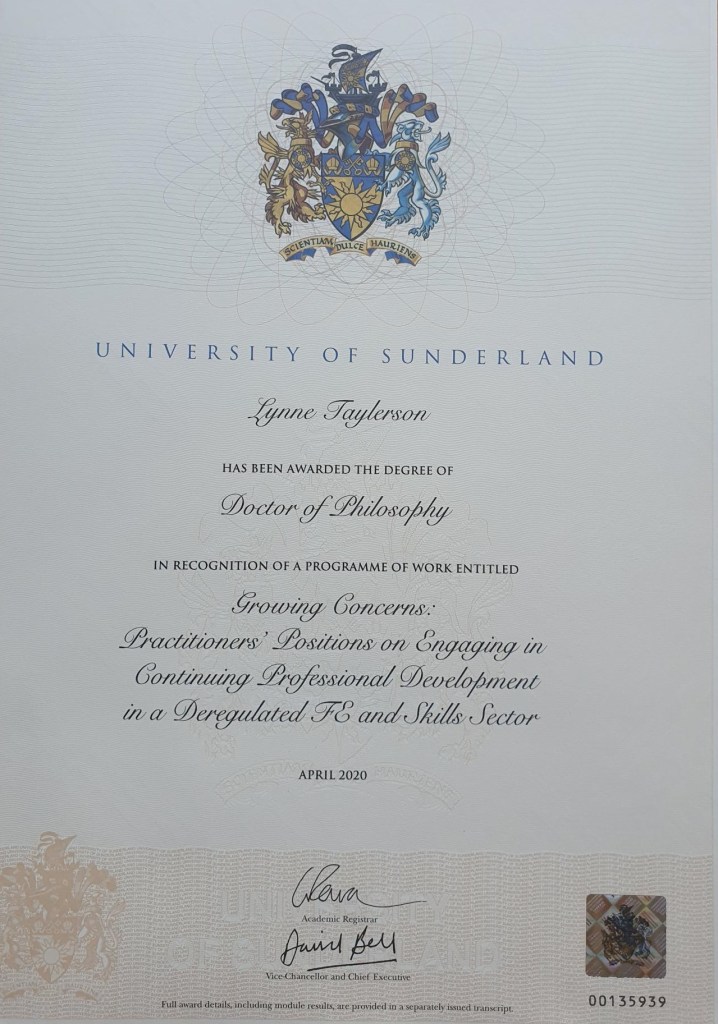
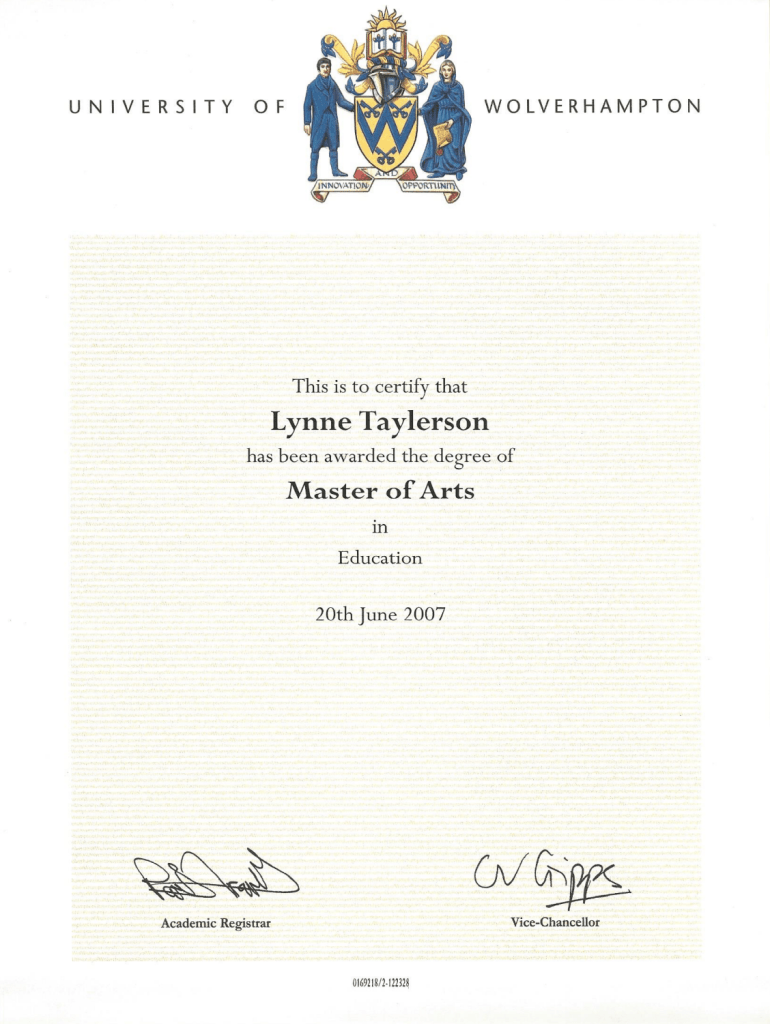
I also have extensive experience in educational research, writing and management. I hold a PhD in Education with research focus on teachers’ informal, digital professional learning (see Specialist Area 1), a Master’s degree in Education with focus on Mentoring and a PGCE in Further and Higher Education.

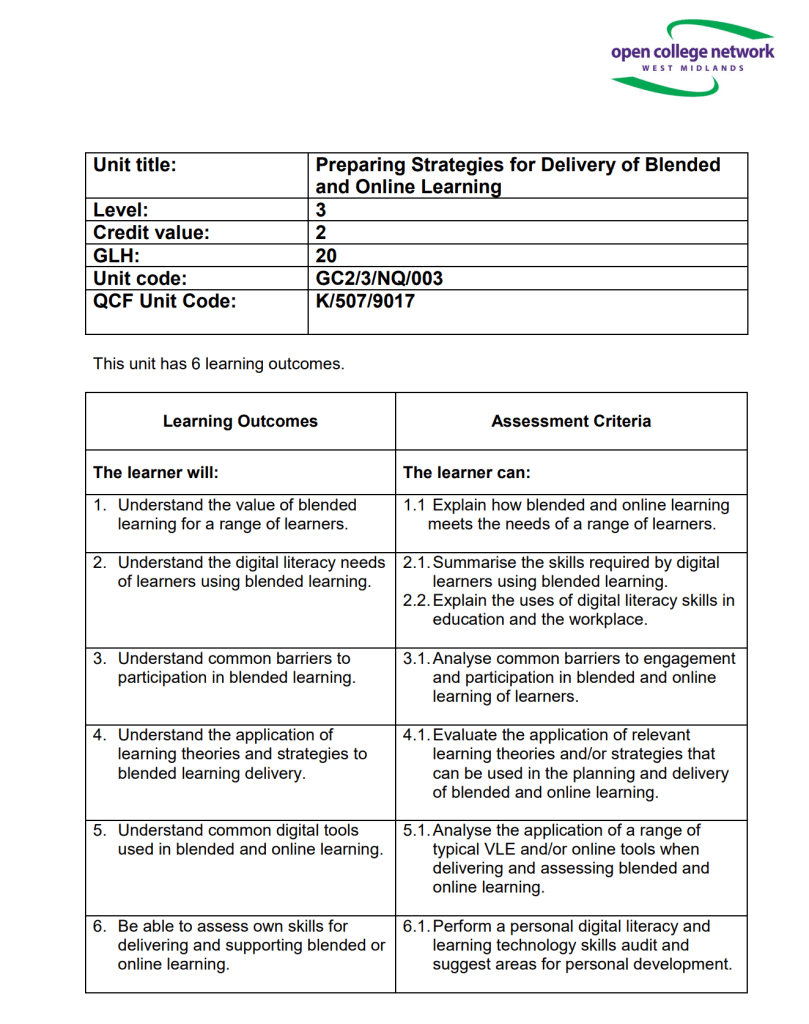
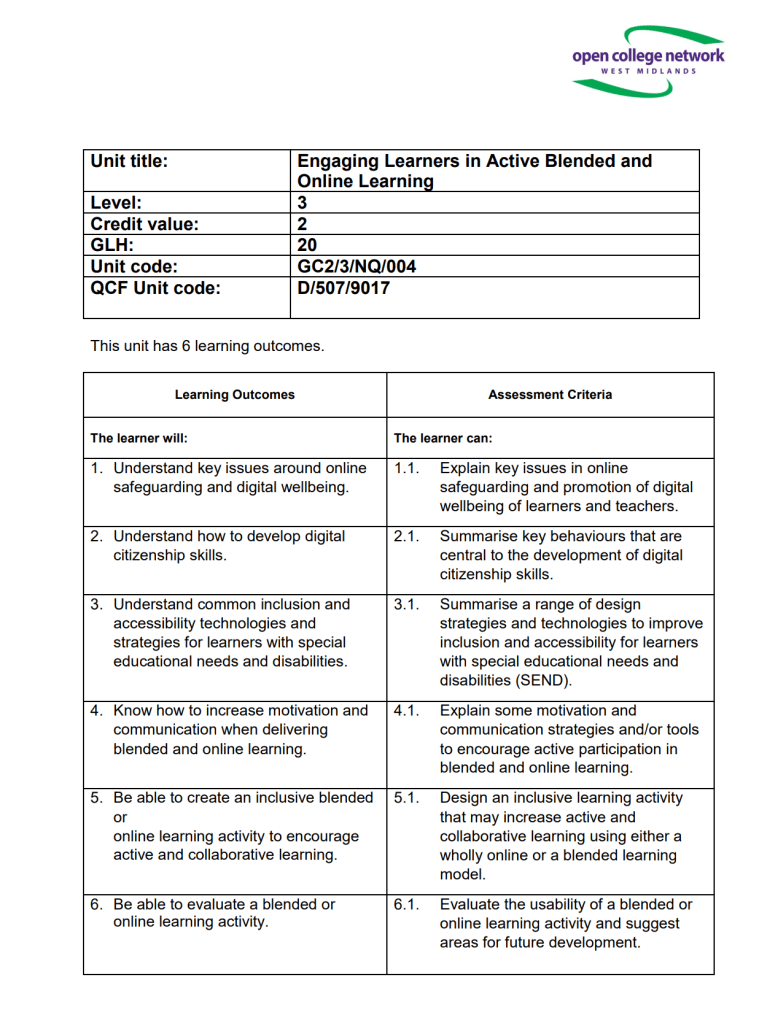
I am a developer of innovative, blended initial teacher training programmes and have designed and facilitated accredited curriculum for OCN (Blended and Online Learning Design (BOLD) below) and NCFE (Technology-enabled Educator (TEE)).

I have developed and managed innovative blended learning programmes as project manager and lead mentor on UCL’s four FutureLearn-hosted Blended Learning Essentials MOOCs. I develop and facilitate curriculum for initial teacher education, CPD and blended learning, holding Associate roles with ALT/Ufi, the Education and Training Foundation (ETF) and Outstanding independent training provider HWGTA.
I hold Chartered Status from the Chartered College of Teaching (CTeach), Society for Education and Training (SET) Advanced Teacher Status (ATS) and Certified membership of ALT (CMALT). I am a member of the Society for Education and Training’s (SET) Practitioner Advisory Group and Jisc’s Student Experience Experts Group.
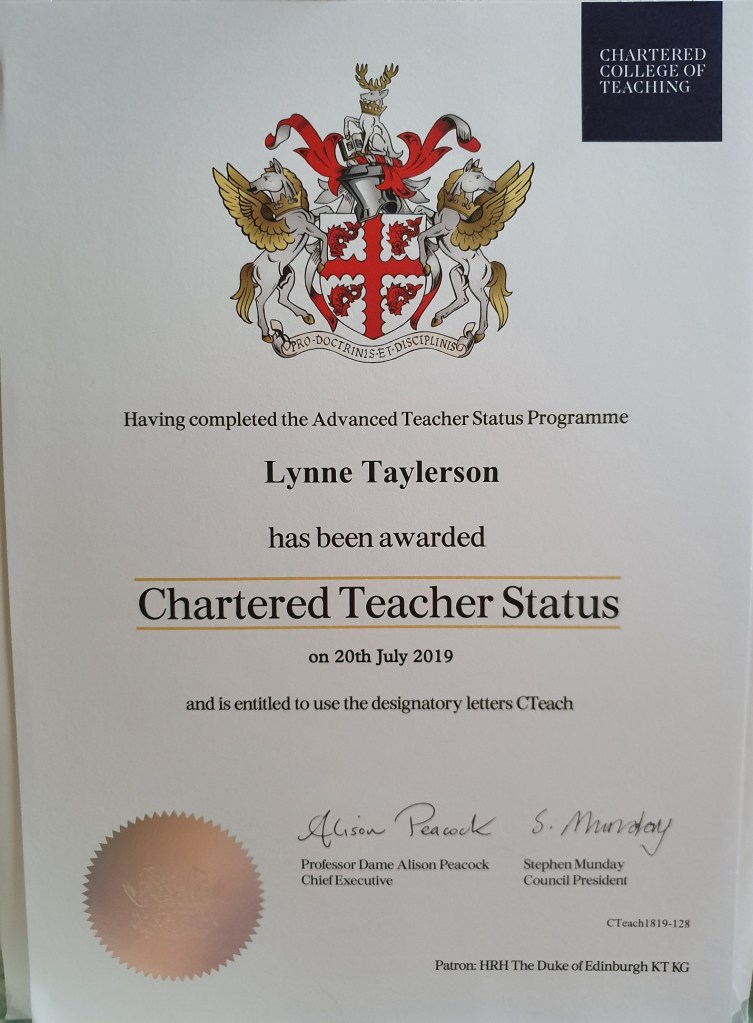
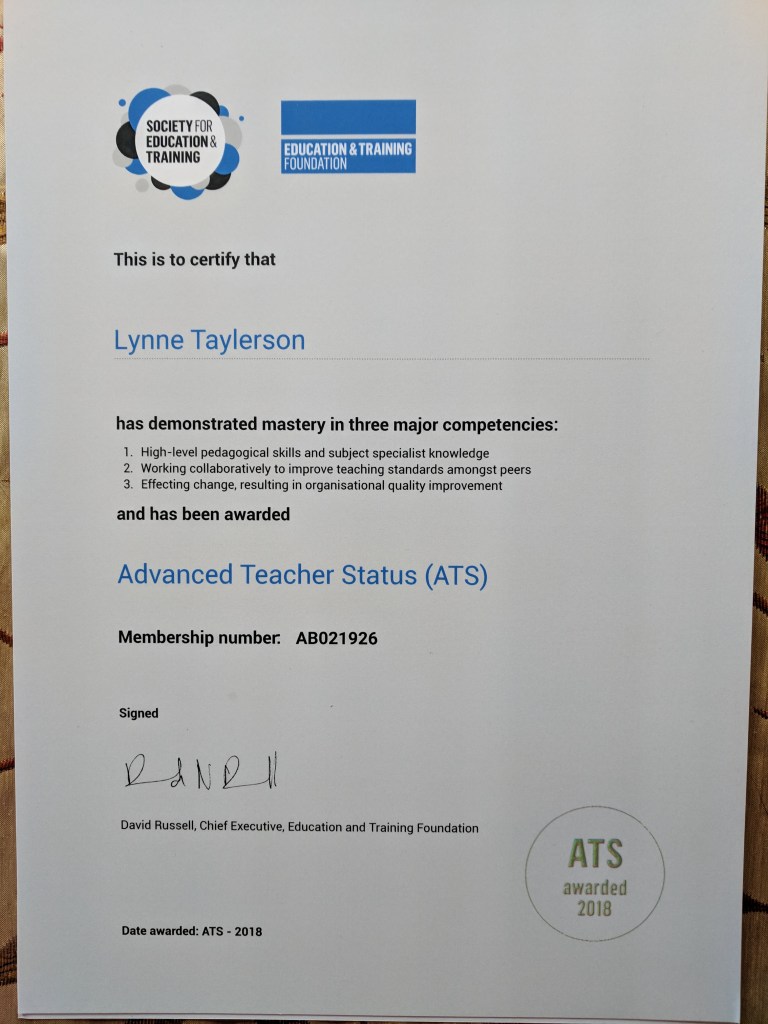
2022 projects with my company Real Time Education Limited included work with vocational education providers to develop blended teacher education curricula, Digital Lead on DfE / ETF CPD programmes focussed on English, maths and digital skills and pedagogy development (OTLA, and #APConnect). I have also designed and facilitated workforce development, IT and initial teacher education curricula for HWGTA and MET Academy Apprenticeship providers.
Two samples of classroom observation team and learner feedback are shown below to demonstrate consistency of quality in curriculum design and facilitation. These are from the latest MET Award in Education and Training cohort surveyed (2021) and an HGTA lesson observation (post-CMALT re-accreditation):
I prioritise active, experiential adult learning. I also try to model this as an essential strategy to the trainee FE teachers I am working with in class and during mentoring dialogues. Central to the effective deployment of technology in active learning strategies is my use of Professor Diana Laurillard’s ‘Conversational Framework’ of six learning types and the A-B-C design model (Laurillard, 2012):
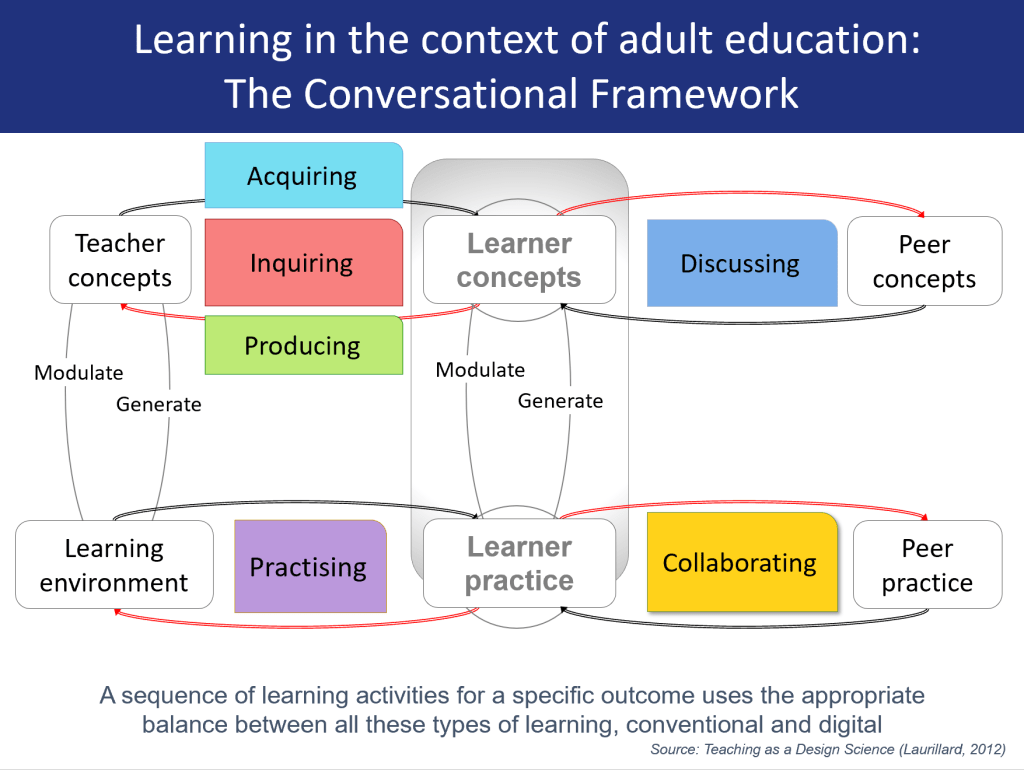
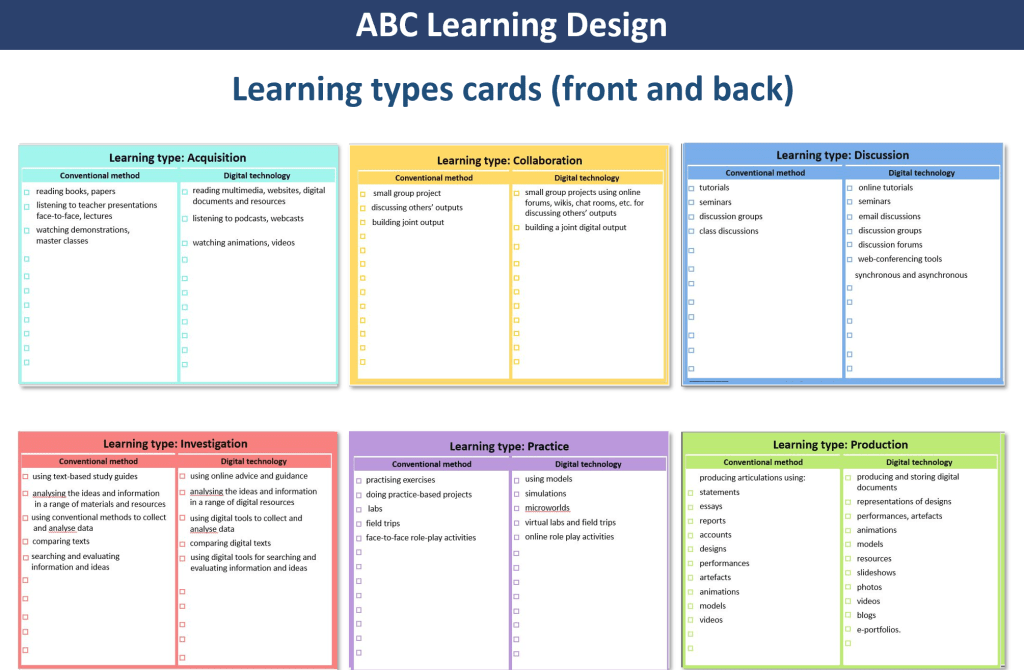
Use of Laurillard’s framework allows me to model and promote active learning by:
- Collaboration (via live, shared digital documents or projects)
- Discussion (via online discussion forums, social media interactions)
- Production (of videos, blogs, posters, animations)
- Practice (via simulations and models)
- Investigation (via online searches, texts, case studies)
And hopefully to minimise the more passive, didactic learning type:
- Acquisition (via listening and watching teachers, videos or podcasts).
I favour using investigation, collaboration and discussion during the discovery phase of learning asking adult learners to explore an issue (such as managing challenging learner behaviour or planning a project). Then, I use practice or production strategies to encourage learners to communicate and share the results of their investigations and consequent learning. Where possible, acquisition is restricted to launching topics and activities, and I prefer to employ a flipped classroom model asking learners to work in analysing and summarising significant points from videos and podcasts rather than adopting a more didactic ‘sage on the stage’ teacher-led strategy. This allows me to use in-person class or tutorial time to work with higher order thinking such as analysis and synthesis activities (Krathwohl, Bloom and Masia, 1964).
Reflection:
The most important factor that I think educators need to bear in mind when working with adult learners in FE and Skills, is the huge richness and diversity of experience and existing skills that learners bring to the learning space. This needs to be acknowledged, valued and used proactively in learning experiences. By asking adults to engage in active discovery learning using strategies such as investigative case study and research work acknowledges the wealth of experiences adults bring and also ensures that they are fully participating in learning.
I find that learning technology is a pivotal factor in this process for two reasons. Firstly, when using a flipped classroom strategy there is a wealth of videos, podcasts, blogs, journals and news articles I can use as what I call ‘thinking provocations’ which get learners grounded in the subject and considering it before they arrive in sessions. This process allows the teacher to focus on proactive support and higher order thinking and minimises the time spent in didactic learning. Then, I can encourage learners to leverage infographics, blogs, presentation software or discussion forums to share and discuss their findings. This strategy gives learners with expereince of a range of ubiquitous workplace digital tools and production methods which they can then use in wider life and future learning.
I find that this strategy can have its challenges. Older adults in particular have often had experiences of passive learning and may bring an expectation that the teacher will ‘tell them the facts’ and they will then be able to memorise and recollect them – this is what their experience of learning has been. Some may not well prepared for learning being a discursive, active process and also need time to adjust and become accustomed to accessing and using rich digital resources.
I also need to be mindful that learners have adequate access and devices out of sessions to access any flipped classroom resources which often requires signposting to local libraries, community centres or leisure and leisure premises offering free wifi. I find that sharing Get Online Week resources or signposting sites and apps such as the Wi-Fi Map app can be valuable in this respect.
The second, related, motive for using active learning and leveraging learning technology is the building of digital skills. Work from the Good Things Foundation (Digital Nation, 2021), Ufi (Levelling Up Learning, White Paper, 2022) and others has drawn our attention to the digital skills gap which can put serious barriers to learning in place for vocational learners, often those who are from most disadvantaged communities and most impacted by the digital divide (discussed more fully in the Advanced Area component). As the modern workplace requires developed digital skills it is important that whichever subject I am teaching I embed digital awareness and the development of essential digital skills. Together with the higher order thinking skills such as analysis and synthesis that we are building using active learning, development of a new digital and analytical skills portfolio should foster more independent adult learners who have skills better fitted for modern life, work and further learning.
I find that Laurillard’s Conversational Framework and A-B-C model is a valuable tool to use when designing my own curriculum and when working with trainee teachers. Alongside this I also introduce new teachers to the accompanying UCL Learning Designer tool which allows teachers to input their lesson plan, with timings and strategies aligned to the framework. The tool will then let them know how passive and active learners are likely to be and give them a much clearer overview of the different types of active learning that they should consider incorporating:
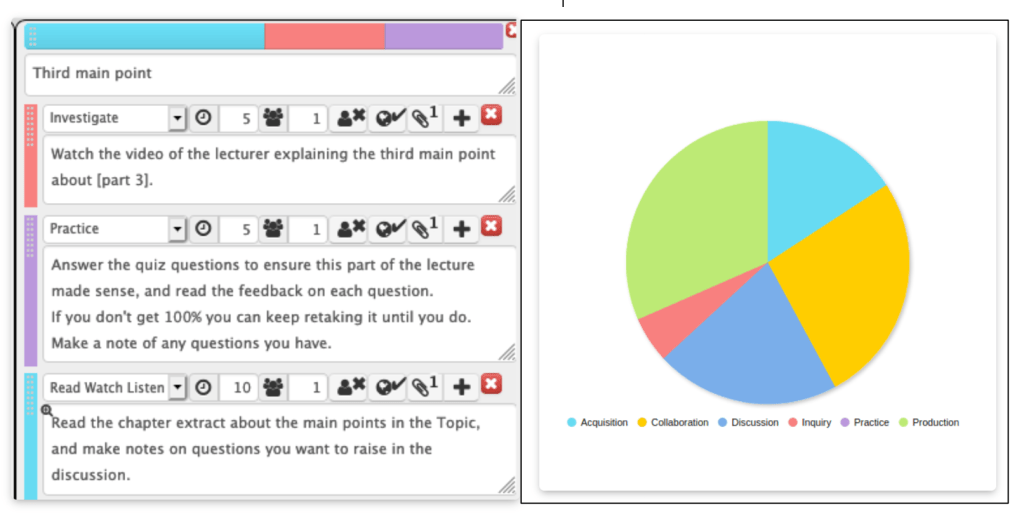
This can then be used as a valuable discussion tool as trainees develop digital pedagogy and practice. By encouraging teams of teachers to use the Learning Designer I hope that we can move whole departments to collaborate more effectively on curriculum co-design and integrate use of digital tools and strategies more effectively.
References:
Good Things Foundation (2021) The Digital Divide. [online] Available from: https://www.goodthingsfoundation.org/the-digital-divide/ Accessed on 28/08/2022.
Krathwohl, D. R., Bloom, B. S.. and Masia, B. B. (1964). Taxonomy of educational objectives: The classification of educational goals. Vol. Handbook II: the affective domain. New York: David McKay Company.
Laurillard, D. (2012) Teaching as a Design Science. London: Routledge.
Ufi (2021) 2021 White Paper: Levelling Up Learning How VocTech can help address the growing digital divide. [online] Available from: https://ufi.ams3.cdn.digitaloceanspaces.com/media/documents/Ufi_VocTech_Challenge_White_Paper_2021_V1.pdf. Accessed on 02/09/2022.
Return to SCMALT portfolio main page
 Lynne Taylerson SCMALT Portfolio