Communication and working with others
Also see cross-cutting evidence on communication and teamworking in portfolio sections 1b (collaborative curriculum co-design), 1c (strategic support) and 2b (curriculum co-evaluation).
As evidence for this section I have described my work with four of the communities I am currently working or collaborating with and have also given briefer details on several others.
#ukfechat
@theukfechat is the longest running weekly Twitter chat for FE educators, founded in Spring 2014 by Adult and Community Learning tutor, and now author and conference facilitator, Sarah Simons. The chat runs weekly at 9 p.m. on Thursdays in FE term-time and has also grown to host in-person and online conferences. The Twitter presence is currently followed by over 3,500 people.
Chloë Hynes, Diana Tremayne, Kerry Scattergood and are I currently the #ukfechat ‘wranglers’ as we prefer this informal way of describing our role to ‘management’ team or ‘caretakers’.
Sarah Simons wished to step back from managing the chats in summer 2021, so asked for experienced FE practitioner volunteers with an active Twitter presence to form a team to take on stewardship of #ukfechat. Chloë, Diana, Kerry and I were chosen due to our active Twitter presence and visibility.

We have a range of roles including promoting the chat to the sector via social media channels at FE conferences and events and in the media, working together to manage the schedule and weekly topics, supporting hosts who are new to the role and also hosting chats ourselves several times a year.
My additional role is as archivist, curating the weekly chats using Wakelet archives so that interested followers who missed a live event can catch up with them and contribute and so that a record is kept as evidence for researchers investigating use of social media by FE teachers.
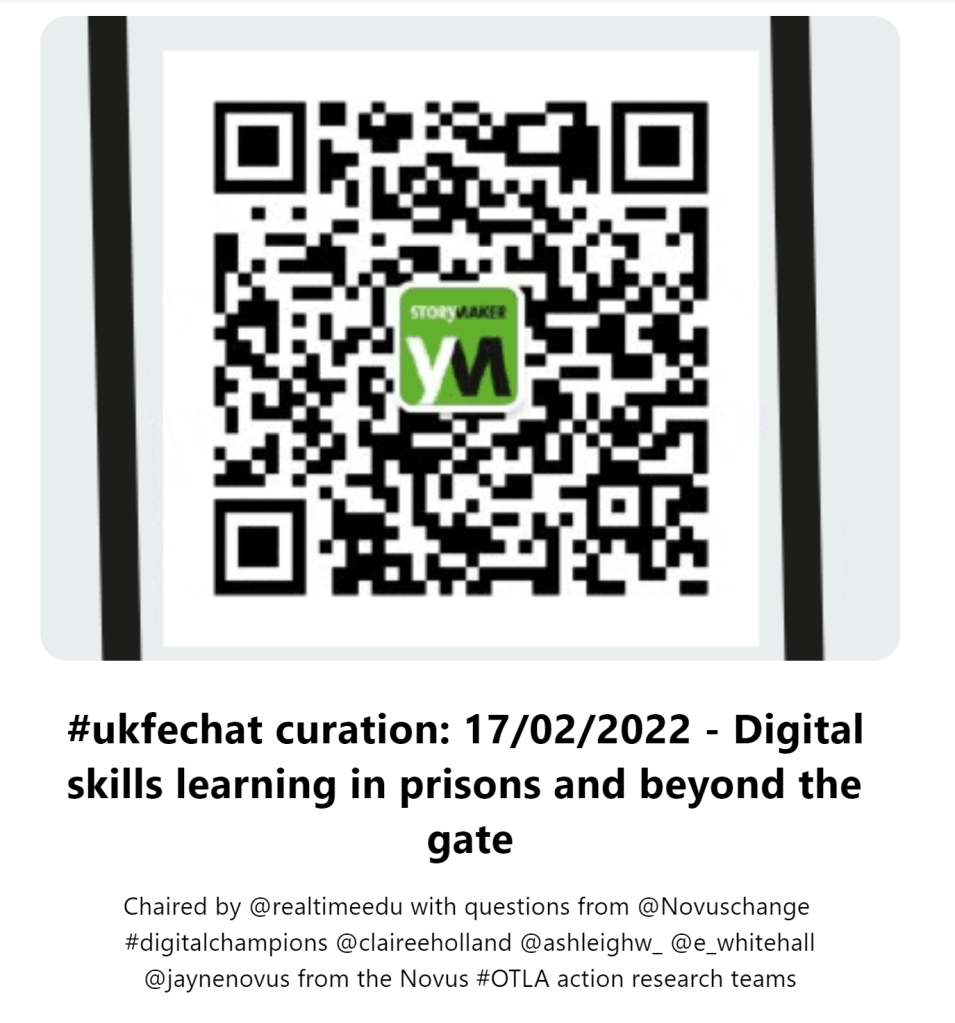
An archive from a typical week’s chat in February 2022 captures some of the energy and diversity of the dialogues:

ALT, ALT OERxDomains, ALT West Midlands Groups and Conferences
I also take an active part in diverse aspects of several ALT communities and communities connected with the Association.
I am currently on the Steering Committee for the ALT West Midlands regional group, in the role of Communications Lead. This Group Officer work involved setting up the committee’s operating procedures and guidelines and its presence on the ALT Groups section of the website and approving and greeting new group members.
As a Group Officer and part of the Steering Committee, we work together to plan and schedule online and in-person meetings, organise topics, recruit and brief speakers for online and in-person events and promote events via social media, email and Eventbrite. At meetings, usually held three times a year, I share the role of greeting delegates, chairing presentations and discussions and disseminating outcomes and resources afterwards. I am also responsible for promoting meetings and disseminating information from them in my role as co-manager of the group’s Twitter feed and LinkedIn presence.
Regarding ALT national events, as a member of the ALTC Conference Committee for the past two years I have been part of the panel which peer reviews conference presentations and papers. This work extended to the ALT OERxDomains event in 2021.
This work involved promoting the conference and assisting at the events – in the case of September 2022’s event in hybrid form. My work included being part of ALT’s #AmplifyFE Community Space presence to promote the new community group on a stand in the foyer at Manchester University where the in-person conference was held. I also worked as part of the ‘meet and greet’ team and technical troubleshooting contact for participants presenting sessions in the conference rooms.
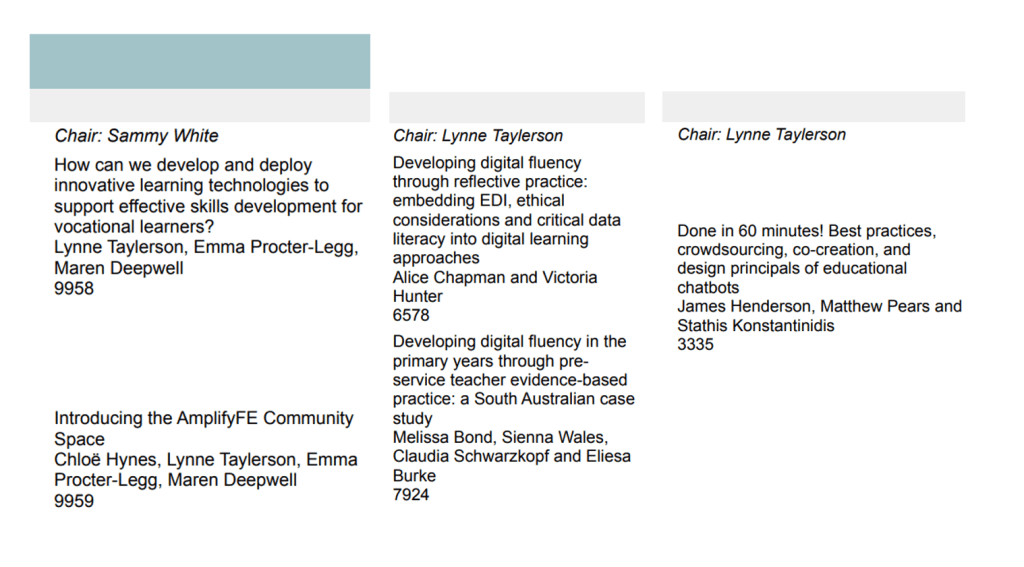
I was also lucky enough to co-present a session this year on the ALT #AmplifyFE research on narrowing the digital divide (see Specialist Area 2) and to act as chair at ten other sessions, all of which can be viewed on the Conference programme.
Other community and collaborative work
As well as the two case studies provided above I also have significant involvement in the work of:
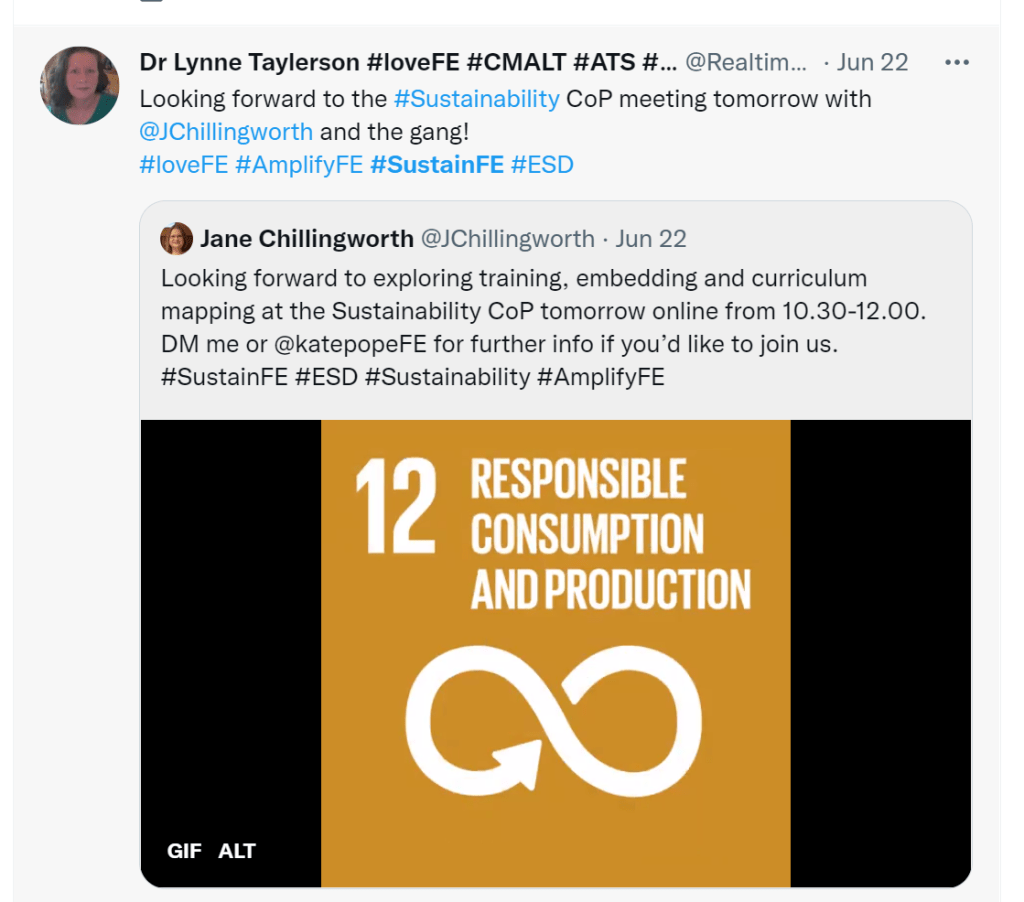
The FE Sustainability Community of Practice (led by Jane Chillingworth)
ALT’s #AmplifyFE Community Space
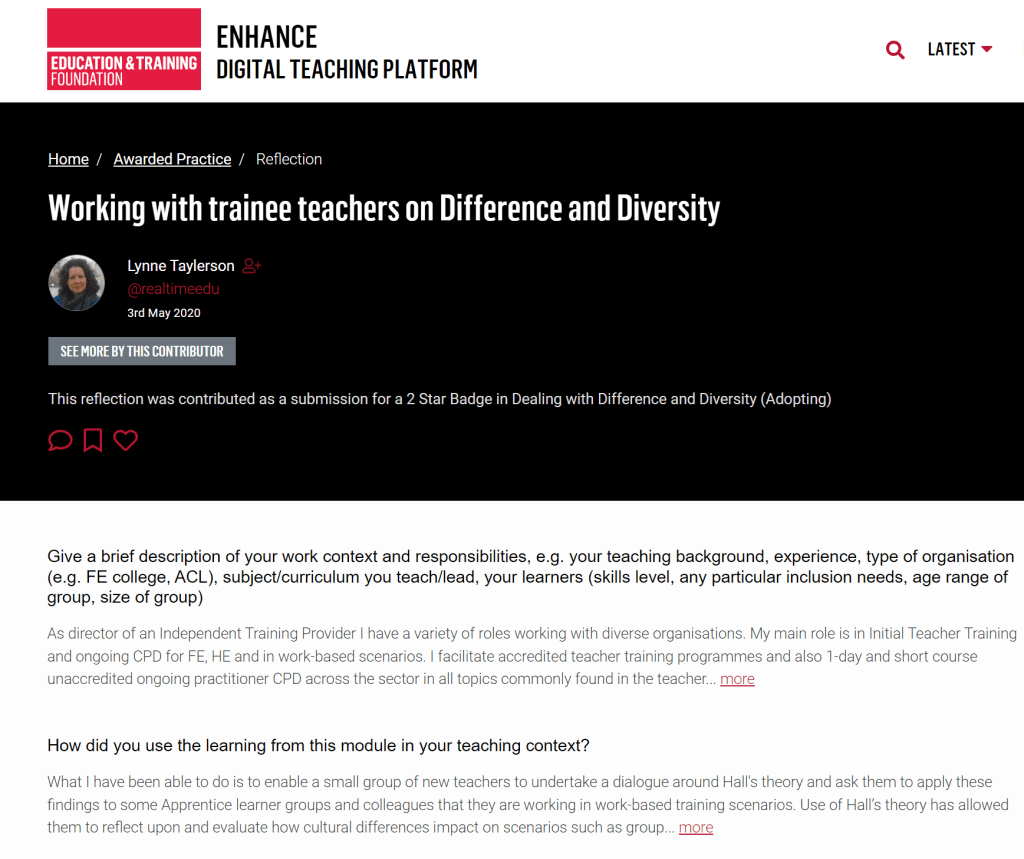
ETF EDS Enhance Community of Practice
Jisc’s Student Experience Experts Group
Reflection
Community working and participation is the part of my practice which I probably enjoy most as I gain so much from the professional networks I participate in.
For the first 15 years of my career in FE I worked as lecturer, then as curriculum leader in a very large multi-campus Further Education college in the centre of Worcester (HoW College). This afforded me the opportunity to have a wide in-house professional network and participate in professional communities such as the lesson observation and quality team, learning technology promotion (ILT team) as well as working on the college mentoring team. I also had ample opportunity for engaging in partnership working and networking with colleagues at several universities and other FE providers.
Now that manage a small Independent Training Provider, working as an Associate with other companies, I no longer have such ready access immediate, pre-existing professional networks, to the ‘staffroom culture’ still evident in larger FE providers. I have had to work hard in the past 6 years to build and further develop new professional networks and relationships.
In my work as a teacher educator I facilitate learning for delegates from across the incredibly diverse FE sector. In a typical group I might have new teachers who are tutoring in topics as widely diverse as Business Studies, veterinary medicine, engineering or hospitality at a large FE college, in Community Learning, in prison settings or out in industry. The range of qualifications they deliver ranges from informal, unaccredited learning through Level two or three Apprenticeships to degree, postgraduate or higher professional qualifications.
Consequently, it is essential that I keep my professional network as wide as possible and engage regularly in professional learning dialogues on curriculum planning, facilitation and assessment with as broad a range of colleagues as possible. This is the only way that I can find out about the successful learning and assessment strategies used and the challenges inherent in facilitating curriculum in these specialised areas. Maintaining a thriving and diverse professional network and interacting with colleagues from all across the sector enables me to provide new teachers with contextualised examples of the qualifications and scenarios they will be specialising in and also allows me to empathise with their professional challenges and mentor them more effectively.
The other benefit I gain from maintaining a wide professional network and collaborating with other sector professionals is that I am able to draw on peers’ experience with new strategies, particularly with respect to new digital tools and emerging applications of learning technology. I find that learning technology in particular is such a fast moving and diverse field, it’s impossible to ‘know it all’. Being able to draw on the expertise and wisdom of experienced colleagues in my professional network gives me the best possible chance for my practice to remain authentic and current.
A welcome aspect of the ‘pandemic turn’ is that many professional networks and communities of practice have moved online and are, at least for the time being, remaining online. This has removed some of the necessity for geographical proximity and the need to set aside travel time in order to maintain thriving, diverse professional networks.
This move to online communication and collaboration has meant that in the past six months I’ve been able to join to new communities (which are both Twitter and webinar-based), @FETeacherEducators and the FE Sustainability Community of Practice. As education for sustainable development (ESD) in particular is an entirely new subject which needs to be embedded into the FE curriculum it is particularly important that we draw on group wisdom and expertise to be able to integrate ESD topics into the curriculum. It is only by maintaining a thriving professional network that I am able to receive timely news of new resources and strategies in specialist areas such as this.
Professional networks doubtless require time, energy and commitment. I find that working with colleagues in this way I get so much more than I give, and consider myself privileged to take an active part in so many wonderful professional learning communities. My participation in online communities has had such a profoundly positive effect on my professional practise I chose FE teachers’ informal online learning as the topic for my doctoral thesis, more details and reflections on informal professional community learning can be found in Specialist Area One.
Return to SCMALT portfolio main page
 Lynne Taylerson SCMALT Portfolio